
RCC Spotlight: Eren Erman Ozguven, Ph.D.
As weather patterns become more extreme, infrastructure systems face increasingly heavier burdens. Many communities lack the emergency response frameworks necessary to handle high-impact weather incidents, which can lead to infrastructure failures such as crumbling roads, overloaded power grids and overwhelmed water systems. For those concerned about local resilience, the central question is clear: How can communities better prepare for, respond to and recover from disasters?
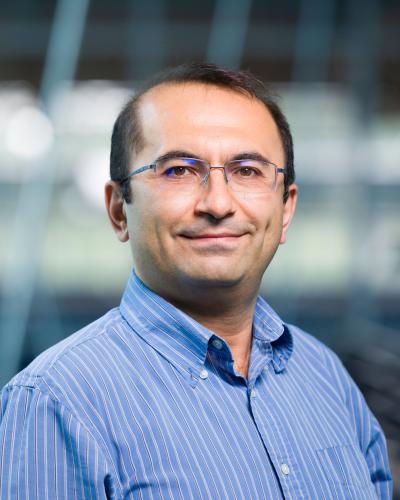
Florida State University researchers like Eren Erman Ozguven are devoting their time and energy to answering this question. After earning a doctorate in Civil Engineering from Rutgers University, Ozguven joined FSU in 2013. He now serves as an associate professor in the Department of Civil and Environmental Engineering at the FAMU-FSU College of Engineering, as the associate director of the Rural Safe Efficient Advanced Transportation (R-SEAT) Center, and as the director of the Resilient Infrastructure & Disaster Response (RIDER) Center.
Ozguven’s research focuses on disaster resilience, traffic safety and mobility, artificial intelligence in transportation engineering, evacuation modeling and intelligent transportation systems.
“My multidisciplinary, human-centered research advances the quality of life of our communities in Florida and in the nation,” Ozguven said, “by developing advanced solutions to our infrastructure-related problems against disasters in both urban and rural areas, which helps minimize the negative impacts of disasters such as hurricanes and wildfires on communities.”
Through RIDER, Ozguven and his collaborators study what the center describes as the “resilience divide,” or the reality that disaster impact and recovery are often shaped by place-based factors such as infrastructure, age, local status and access to resources. The RIDER Center was created in response to this challenge, bringing together engineers, social scientists, social workers, health experts, public policy specialists, communication researchers and information professionals to develop emergency plans that reflect the distinct needs of different communities.
"We want to be the voice of communities,” Ozguven said. “We want to have our communities be involved in disaster planning, preparedness and recovery, and that's the goal, that's actually the mission of RIDER.”
Disaster resilience research requires large, interconnected models that account for natural hazards and their effects on infrastructure systems. For example, hurricanes, which Ozguven has studied extensively, can cause road closures, power outages, downed trees, storm surges and flooding, all of which can influence evacuation routes and emergency responses. To study those interactions, Ozguven’s team uses advanced hazard simulation models, geographic information systems, statistical analysis, artificial intelligence and other computational methods.
That is where the FSU Research Computing Center (RCC) plays a critical role.
Ozguven uses RCC resources to run large-scale simulations that examine both the characteristics of disasters and the interdependencies among infrastructure systems, such as roadways and power grids. These models help his team better understand how infrastructure networks respond under stress, supporting communities in coordinating more efficient and resilient emergency responses. The ability to model those interdependencies is essential for real-world planning.
For Ozguven, the work is not only about infrastructure, but also about the people who rely on it. Communities experience disasters differently, and emergency plans must account for local needs, available resources and social vulnerability. As Florida and the Southeast face increasingly complex disaster risks, Ozguven’s research demonstrates how high-performance computing can support stronger, more informed decision-making. With help from the RCC, his team can model hazards, analyze infrastructure systems and develop tools that help communities prepare for the next crisis before it arrives. For more information about the Research Computing Center, visit its.fsu.edu/research.